
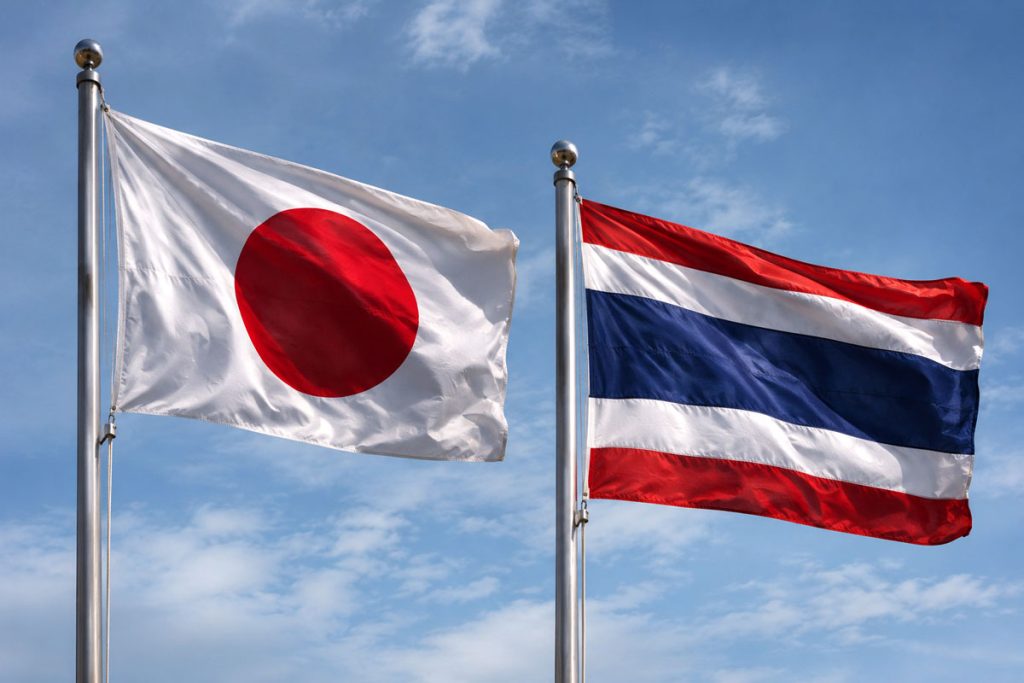
Japan shifts gear, Thailand must respond
By Kavi Chongkittavorn*
Japan’s augmented role in security has flabbergasted its friends and rivals. For eight decades after World War II, Japan’s trade and investment helped build Southeast Asia’s prosperity.
But Prime Minister Sanae Takaichi is turning the page. Tokyo now talks openly about strategic autonomy, once taboo among policymakers. Global uncertainty and Washington’s transactional diplomacy have prompted the shift.
The Trump administration has made clear to allies and friends: help yourself before you ask the US for help. Washington no longer wants to pay most of the cost of regional security. Trump’s argument is that globalization has sucked the US dry and free trade has stolen American jobs.
Tokyo has no intention of leaving the US-led alliance. Instead, it wants to become an indispensable US partner with some room for its own maneuvering, while keeping Washington engaged in the region. At the same time, Tokyo also aims to fit in with the existing alliance network. Its biggest advantage is trust. Southeast Asian leaders trust Japan more than any other major power in regional surveys.
Without doubt, this trust has also permitted Japan to broaden its international profile. At the recent UN General Assembly, Takaichi revealed that Japan would like to play a more active role in settling disputes through the International Peace Mediation Unit within the Ministry of Foreign Affairs. Since then, its officials have been attending various mediation, peace-building, and conflict-prevention forums to exchange views and learn good practices.
Within the Japanese context, strengthening of national defense alongside mediation initiatives are known as the art of “konan ryoyo,” the utilization of hard and soft approaches simultaneously.
For years, Japan has been wrestling with its economic and security dilemma as it searches for an alternative that would lessen dependency on the US. Tokyo has done much to back up US global strategies.
When the Trans-Pacific Partnership collapsed after the US pulled out during Trump’s first term, Japan saved the day with the Comprehensive and Progressive Agreement for Trans-Pacific Partnership (CPTPP). Now Tokyo wants to do more.
Currently, the best example is Japan’s role in the Partnership for Indo-Pacific Industrial Resilience (PIPIR), launched by the Pentagon in May 2024. The war in Ukraine showed that the US and its friends cannot supply enough ammunition for a long war. Under PIPIR, members share the work of replenishing and repairing weapons where they are needed. The group now has 16 members. Thailand joined in March 2026.
Japan has been involved in several projects, including a joint effort with the US to make solid rocket motors, which are important for producing missiles. In April, Tokyo and Washington agreed to produce more interceptor missiles.
Most importantly, parallel to this development, the Takaichi government also lifted the long-standing ban on exporting lethal weapons. Japan is taking on a larger role in supplying and sustaining allied defence in Asia.
Each country in the region will have its own role. In the case of Thailand, its annual Cobra Gold is one of the prominent security links with Japan. After 45 years, it still remains one of the largest multinational military exercises in Asia. This year’s exercise involved more than 8,000 personnel from 30 countries. Japan, South Korea, Singapore, Indonesia, and Malaysia joined Thailand and the US as full participants.
For over four decades, Cobra Gold has helped armed forces improve combined operations capability, test command-and-control rules, strengthen communication links, and conduct tabletop exercises. In these exercises, Japanese forces have learned to work inside US-led command systems far from their shores.
As Thailand and the US are reviewing their strategic relations, both countries can build on what Cobra Gold has created to align with the PIPIR framework. The key objective is to establish supply chains among various armed forces as they share the same rules and command systems.
For instance, Thailand has the U-Tapao Airbase, which has been used by US forces both during peace and war times. It can also repair US-made equipment and serve as a logistics hub. Bangkok can easily link up with Tokyo-US supply chains in security.
Thailand is eager to tap into Japan’s defense industry as it tries to develop its own arsenal and defense capacity. Tokyo has top skills in engineering, precision manufacturing, and shipbuilding. Moreover, several Japanese companies have already manufactured American weapons under license. But its defence industry is still small, and facing a shrinking workforce. Any effort to strengthen this industry would be welcomed.
These days, Japanese media are filled with reports related to the country’s plan to rewrite its three main security documents by the end of this year. The new plans will prepare Japan to face an uncertain world. There is a strong consensus that Japan must be able to protect itself with or without the US.
In terms of mediation, Japan is not a newcomer. It helped to mediate the Cambodian conflict among the warring factions in Tokyo in 1990, which was its first effort. Later, Japan was also involved in the Aceh (2002) and Mindanao peace processes. Japan’s special envoy on Myanmar, Yohei Sasakawa, helped arrange a ceasefire in Myanmar’s Rakhine State in 2022. More than ever before, Japan wants to be seen as a peacemaker.
Japan has to be cautious in pursuing these dual strategies because of its past relations with Southeast Asia. Historical memories and experiences are a strong reminder that Japan must not return to its past militarism. The region will be a test case.
In more ways than one, Thailand should be Japan’s partner as the two countries are also searching for a fresh trajectory to strengthen their bilateral cooperation. They are celebrating the 140th anniversary of diplomatic relations next year.
Thai leaders, however, have not yet appreciated this trend. Bangkok still sees Japan mainly as a source of trade and investment. In Thailand, security and economics run on separate tracks. In Tokyo, they are part of the same plan.
Alarm bells rang in September when Toyota was reported to put more than US$283 million into hybrid and electric vehicle production at Phu Tho in Vietnam. The news shocked Thailand, which is still Toyota’s regional production base at about 770,000 vehicles a year. Today, Japanese companies often look for alternatives. Vietnam and Indonesia are often mentioned as ideal choices.
The Anutin government must adjust to the new realities and keep pace. Thailand cannot rely on its past success as Japan’s factory in Southeast Asia. It should treat Cobra Gold and PIPIR membership as economic security assets, pushing for real joint production, repair work, and technology transfer linked to its investment policy.
Japan is beefing up its defence to deter conflict and its mediation track to defuse it. Both Thailand and Japan can cooperate and share in these common endeavours.
*Kavi Chongkittavorn is a member of the Board of Institute for Public Policy. The article first appeared in The Bangkok Post (November 3, 2026). Reprinted with permission.
Subscribe Today
Subscribe to our mailing list to
get the new updates!