
ASEAN Cooperation on Energy Security and Trade, Moving to Operational Reality
By Narongchai Akrasanee, Ph.D.*
At the ASEAN Summit in the Philippines on 8 May, 2026, ASEAN announced cooperation priorities on energy security and food security. These were related to the ongoing trade uncertainties due to global geo-politics and geo-economics changing scenarios, from globalization to global fragmentation.
The challenge is how to move from aspirational cooperation to operational reality.
On ASEAN energy security, the challenge is serious. Reports of incidents concerning petroleum products availability and prices in the Philippines and Indonesia during these last few weeks confirm this problem. As the region relies mainly on fossil fuels for energy sources, of which the region is a growing net importer, the challenge is how to secure new supply sources while the Middle East sources are uncertain.
As ASEAN member countries have different energy supply structure in terms of raw materials and refined products, and sources of energy production, the best policy is to allow market forces to fully function. This will allow oil and gas traders to find the best sources to buy and markets to sell, particularly in times of uncertainty. To do so would require regulatory reform on production of oil and gas, and generation and transmission of electricity.
On the demand side, we need to acknowledge the fact that demand for energy particularly for electricity will grow at exponential rate from now. This is because of AI revolution, which is very much like electricity revolution in the late 19th and early 20th centuries. As demand for data grows, there will be demand for data center services and thus electricity supply to serve the data centers.
For ASEAN, challenge from the demand side is most serious. As ASEAN must be a party to AI revolution, ASEAN must be able to satisfy this demand challenge. Obviously, managing this exponential growth in demand at the region level will be more efficient than each member country’s doing it individually. On this point, and in the case of Thailand, the private sector has come up with an interesting formula of 4Ds plus E.
- D1 – Digitalization (use digital technology to manage the electricity system).
- D2 – Decarbonization (reduce carbon emissions).
- D3 – Decentralization (distribute electricity generation and transmission for freely).
- D4 – Deregulation (promote competitiveness with regulatory reforms)
- And
- E – Electrification (expand the use of electricity to replace fossil fuels).
So, energy security for ASEAN is not an easy task. This is particularly the case because energy, being in the forms of oil and gas, or electricity – non-renewable and or renewable, are political products/services. There will always be the dilemma between availability and affordability. It can also be a trilemma, with acceptability being an issue.
Because of all these challenges, moving from aspirational cooperation to operational reality needs works from many parties. The Track 2 approach with strategy institutions working together will help facilitate the move.
The move is to focus on:
- Ratification of the ASEAN Framework Agreement on Petroleum Security (APSA)
- Advancing the utilization of ASEAN Power Grid (APG)
- Through Power Integration Project (LTMS-PIP, BBIMP- PIP)
- Advancing Trans-ASEAN Gas Pipeline (TAGP)
Turning to trade, foreign and intra-ASEAN, it is obvious that trade has been a major engine of growth for ASEAN. Since the early 1990s, foreign trade of ASEAN has been doubling at every ten years, helping the ASEAN economies to grow along with trade. Thanks to AFTA, intra-ASEAN trade has grown with total ASEAN trade, maintaining the share of about 25%.
ASEAN trade growth has been due to open economic order during this period. ASEAN itself has played an important role, having adopted AFTA in 1992, joining APEC in 1993, and supporting WTOs before and after its establishment in early 1995.
But since 2017 when Donald Trump became the US President, the US started to intervene in international trade, claiming that open economic order failed the US. This trade intervention became more severe when Donald Trump returned as the US President in 2025, now adopting tariff lines as ballistic missiles, threatening the countries trading with the US. Trade flows became chaotic. But, interestingly, in spite of all US actions, trade continued to grow, even higher growth for some countries.
As trade grow at times of global fragmentation, it means that the markets want trade, and adjust themselves accordingly. This has happened in ASEAN countries, especially for Vietnam, Thailand, and Indonesia.
In order to facilitate market adjustment, ASEAN should accelerate the process of amending the ATIGA (ASEAN Trade in Goods Agreement).
In order to facilitate market adjustment, ASEAN should accelerate the process of amending the ATIGA (ASEAN Trade in Goods Agreement). Also, as digital or E-commerce is growing very rapidly, the ASEAN Digital Economy Framework Agreement (DEFA) should be finished and enter into force as soon as possible. It is expected that DEFA will be finalized at the ASEAN summit in the Philippines in November this year.
Again, for all ASEAN agreements, they are deemed to be aspirational cooperation. Moving those to operational reality needs works from many parties. The Track 2 approach has been proven to be very useful contributor to the process.

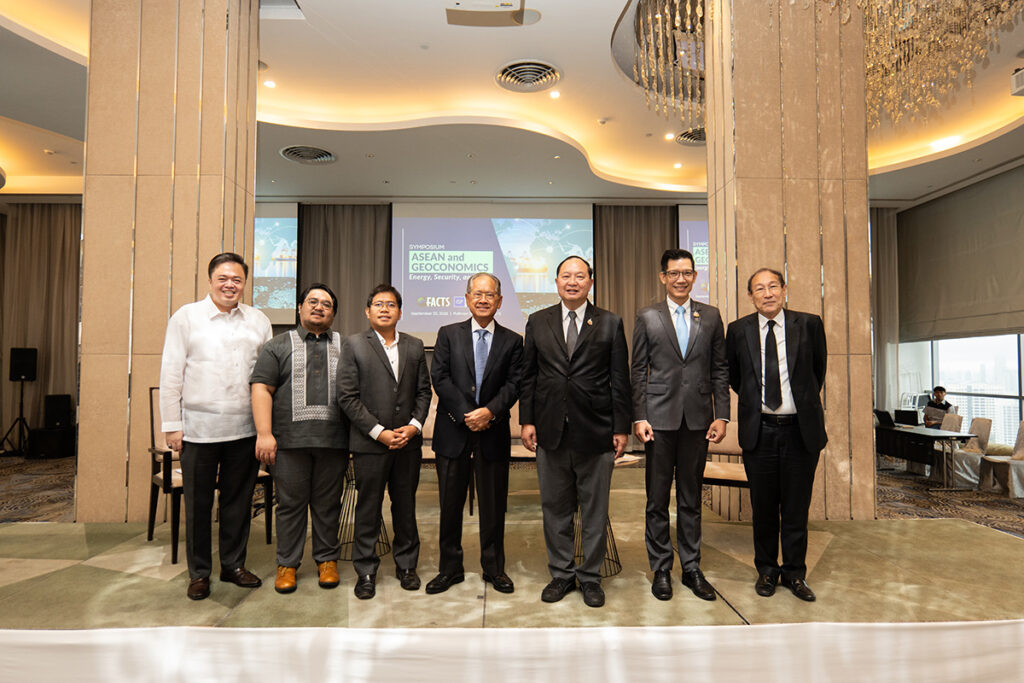
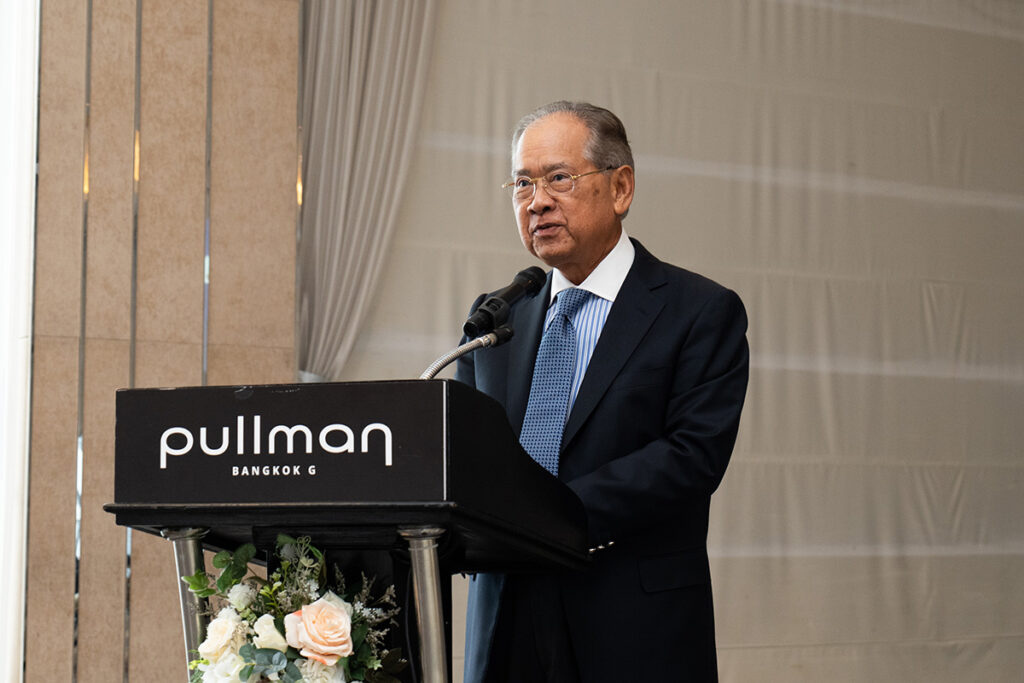
*A keynote outline at the Symposium on ASEAN and Geoeconomics: Energy Security and Trade. The event was co-organised by FACTS Asia and the Institute for Strategic Policy (ISP), September 25, 2026 at Pullman Bangkok Hotel. Dr. Narongchai is Chairman of Institute for Strategic Policy.

Subscribe Today
Subscribe to our mailing list to
get the new updates!